Aruba’s weather is the main reason it’s one of the most reliable Caribbean destinations — and the reason it draws visitors year-round when other islands become risky gambles. Here’s everything about the climate, month by month, with what it actually means for your trip.
Weather sorted — now the fun: Aruba catamaran tours, parasailing in Aruba and snorkeling tours.
Our Aruba restaurant shortlist
We keep notes on hundreds of places on the island. We will send you the short version — the ones actually worth your evenings, by area and budget.
By submitting you agree we can email you about your Aruba trip. One or two emails, then nothing. Unsubscribe in one click from any of them.
Aruba Climate Overview
| Metric | Detail |
| Average annual temperature | 82°F / 28°C |
| Temperature range (all year) | 79–90°F / 26–32°C |
| Annual rainfall | 17 inches / 430mm (drier than Los Angeles) |
| Sunshine days per year | ~350 |
| Trade winds | Northeast, 15–25 knots year-round |
| Hurricane risk | Extremely low — outside hurricane belt |
| Humidity | Low–moderate; trade winds keep it comfortable |
| Water temperature | 79–85°F / 26–29°C year-round |
Monthly Weather in Aruba
January & February
Temperature: 79–83°F (26–28°C). Rain chance: very low. Wind: strong trade winds 20–28 knots. Peak tourist season — the most comfortable months weather-wise and also the busiest and most expensive. Low humidity. Virtually no rain. Strong trade winds make it excellent for windsurfing and kitesurfing but catamaran cruises still operate fine on the protected western coast. Hotels fully booked.
March & April
Temperature: 80–85°F (27–29°C). Rain chance: very low. Carnival concludes (mid-February Grand Parade in 2026). Spring break mid-March to mid-April. Still excellent weather. Wind slightly easing from the January–February peak. Very popular period — book restaurants and tours well in advance.
May & June
Temperature: 82–87°F (28–30°C). Rain chance: low. Wind: moderate. The best value window. Weather remains excellent, crowds thin out post-Easter, hotel prices drop 20–35% vs peak. Soul Beach Music Festival in late May. Arguably the best time to visit for couples and first-timers combining quality with value. Full seasonal guide
July & August
Temperature: 84–90°F (29–32°C). Rain chance: low-moderate. Hottest months of the year but trade winds make it comfortable. American summer holiday families dominate. Prices mid-range. Water temperature at its warmest — excellent for swimming and snorkelling. Some brief rain showers possible, passing within 30 minutes.
September & October
Temperature: 83–88°F (28–31°C). Rain chance: moderate (still low by global standards). Aruba’s ‘wet season’ — though the island receives so little rain that this term is relative. Slightly more overcast days possible. Lowest hotel prices of the year. Beaches are quiet. For budget travellers, September–October offers genuine value with still-good weather. Zero hurricane risk despite being peak Atlantic hurricane season elsewhere.
November & December
Temperature: 81–86°F (27–30°C). Rain chance: low. Wind picking up again. Transition to peak season — December is full peak with Christmas and New Year crowds. Book December well in advance. New Year’s Eve fireworks over Palm Beach are spectacular. Hotels at highest prices of the year.
The Trade Winds
Aruba’s constant northeast trade winds are what make the island liveable despite being close to the equator. The winds average 15–25 knots year-round and are strongest December through April. They keep temperatures comfortable, reduce humidity significantly compared to other Caribbean islands, and make Aruba one of the world’s premier windsurfing and kitesurfing destinations.
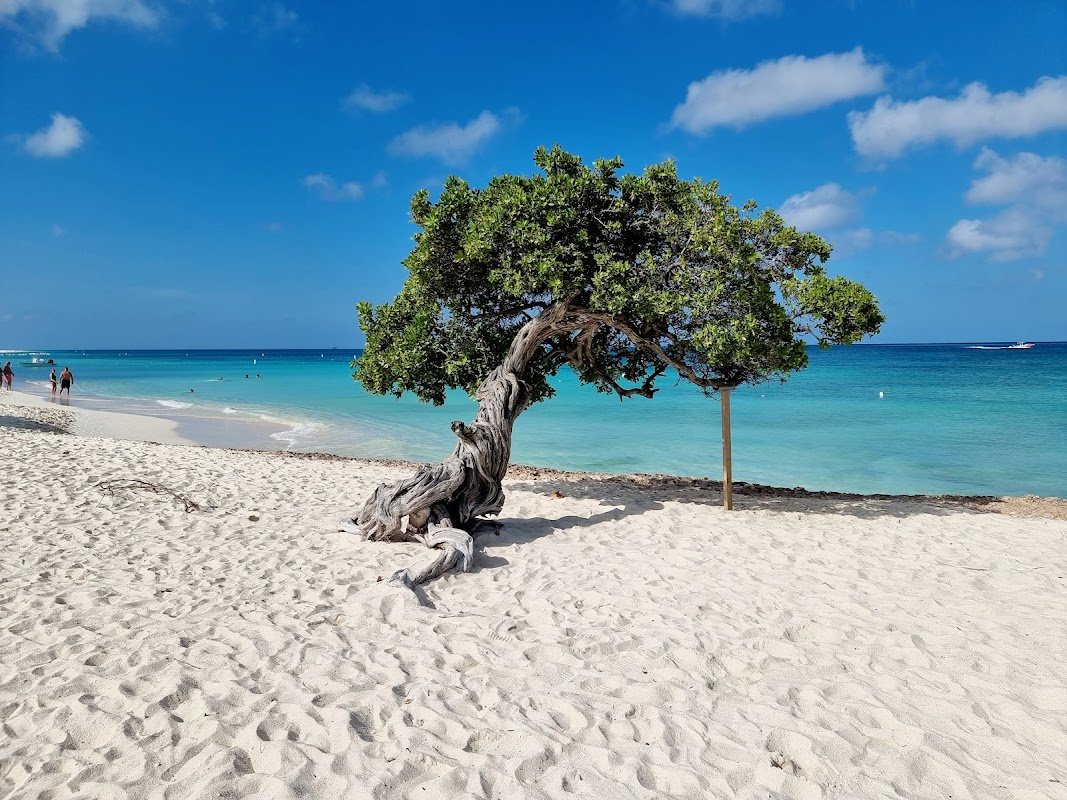
The trade winds also explain the divi-divi tree — Aruba’s iconic tree that always leans toward the southwest, permanently shaped by decades of constant wind from the northeast. The western coast (Palm Beach, Eagle Beach) is sheltered from the main wind; the northern and eastern coasts are fully exposed.
Rain in Aruba
Aruba averages just 17 inches (430mm) of rain per year — less than Los Angeles (15 inches) or New York (46 inches). Rain almost always comes as brief tropical showers that pass in 15–30 minutes and are usually followed by sunshine. A full day of rain in Aruba is genuinely rare at any time of year.
When rain does fall, it tends to be in the late afternoon or evening. The brief shower model means it almost never ruins a beach day — it interrupts it briefly and then passes.
Hurricane Risk in Aruba
Aruba sits at 12° north latitude — well south of the hurricane track, which typically runs through islands at 15° north and above. The island has been directly hit by a hurricane only twice in recorded history. This makes Aruba fundamentally different from Jamaica, Dominican Republic, Puerto Rico, Barbados, and most other popular Caribbean destinations in terms of hurricane risk.
During the Atlantic hurricane season (June through November), Aruba remains a safe and reliable destination while other Caribbean islands may face genuine weather uncertainty. This is one of the most compelling reasons to choose Aruba over other Caribbean islands for special occasions, honeymoons, and any trip where the weather matters.
Aruba has one of the most consistent climates in the Caribbean. Temperatures range from 79-90°F year-round. Annual rainfall is only 17 inches. Sunshine approximately 350 days per year. Strong northeast trade winds blow year-round keeping humidity low. No meaningful hurricane risk.
Very little. Aruba averages 17 inches of rain annually — drier than Los Angeles. Rain comes as brief tropical showers that pass in 15-30 minutes, usually in the late afternoon. A full day of rain is genuinely rare at any time of year.
Yes — July and August are the hottest months (84-90°F / 29-32°C). However, the constant northeast trade winds make it significantly more comfortable than the raw temperature suggests. The water temperature is at its warmest in summer.
Extremely rarely. Aruba sits outside the main hurricane belt and has been directly hit only twice in recorded history. During Atlantic hurricane season (June-November), Aruba remains a safe and reliable destination when other Caribbean islands face genuine storm risk.
December through April has the most consistently perfect weather — low humidity, minimal rain, strong trade winds, and virtually no overcast days. May-June is nearly as good weather-wise but with 20-35% lower hotel prices and fewer crowds.
Aruba water temperature ranges from 79°F (26°C) in winter to 85°F (29°C) in late summer. The water is warm year-round — comfortable for extended swimming and snorkelling without a wetsuit in any month.
📅 Best time to visit Aruba | ✈️ Complete Aruba travel guide | 🏖️ Best beaches in Aruba
🎯 Book Top-Rated Aruba Tours
Browse every Aruba tour with live prices →
Free cancellation on most tours. Prices shown are per person.
Already set up on the sand · Eagle Beach or Palm Beach · Yours 10am to 4pm
100+ hotels · Free cancellation on most · Best price guarantee
Caught a grey day? They are rare and short — here is exactly what to do in Aruba when it rains.
Add an excursion
Live availability pulled from Viator.

 Traveller favourite
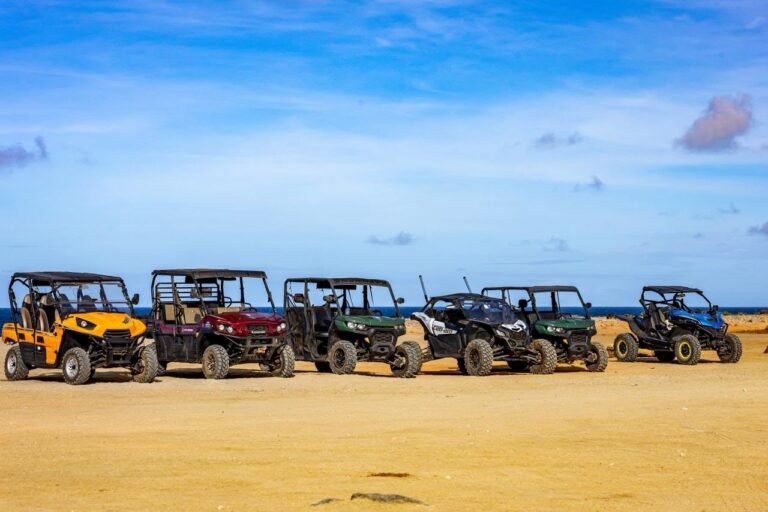
Aruba Small-Group UTV Adventure|Private Off-Road Tour Max 4 UTVs
$256 / person
Check dates & book Highly rated
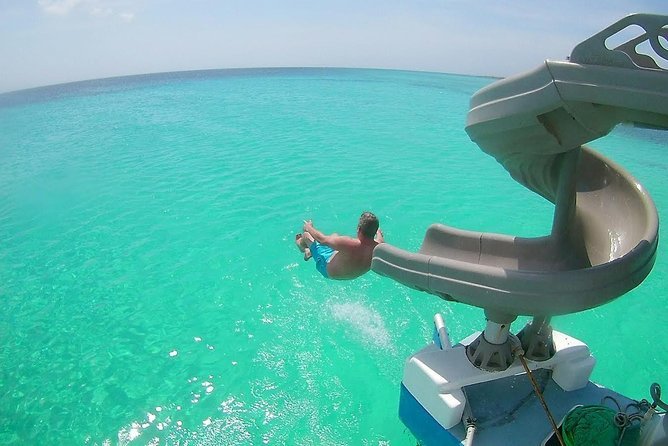
Tropical Sailing Experience with BBQ Lunch or BBQ Dinner in Aruba
$135 / person
Check dates & bookLive prices from Viator · free cancellation up to 24 hours before · we earn a small commission at no extra cost to you.
Frequently asked questions
Does Aruba get hurricanes?
Aruba sits at about 12.5°N, below the hurricane belt, and is rarely affected. Storms generally track north of the island. That is the main reason it stays a reliable Caribbean choice during the Atlantic hurricane season.
When is the cheapest time to visit Aruba?
May through early December. Hotel rates drop well below the January to April peak, crowds thin out and the sea is at its calmest. Rainfall ticks up slightly but stays low by Caribbean standards.
What is the weather like?
Hot and dry year-round, typically 28 to 32°C in the day with constant trade winds that make the heat comfortable. Annual rainfall is under 500mm, mostly as short showers.
How far ahead should I book?
Three to five days for tours in peak season and 24 to 48 hours off-peak. Hotels are worth booking one to two months ahead for January through April.
Bring Aruba Home With You
Authentic Aruba merch — designed by locals, shipped worldwide.


Our cars
Rent a car with us — from $50 a day
Automatic and air conditioned, picked up at the airport, your hotel or our Oranjestad office. Pay 13% online to hold the car and the rest when you collect it. Minimum 3 days.
See cars and prices →✈️ Search Flights & Hotels to Aruba
Compare prices across airlines and hotels in seconds.
We earn a small commission at no extra cost to you.
We are an independent Aruba travel guide. Our rankings are honest — we track live prices across 460+ tours and 180+ hotels, we update guides continuously, and no operator can pay for a better review. Read our editorial policy and who we are.
✈️ Cheap Flights to Aruba
Live lowest round-trip fares found on Aviasales
🚕 Airport Transfers
Pre-book a private transfer from Queen Beatrix Airport to your hotel
We earn a small commission from affiliate links at no extra cost to you. This never affects our recommendations.
Book direct · no booking fees
Our own bookings, if you need them
Run by us and local operators we work with directly. A small deposit online holds it, and you settle the rest on the day.