Aruba has a population of approximately 108,000 people — making it one of the most densely populated islands in the Caribbean relative to its size (180 km²). Despite its small scale, the island is remarkably diverse: more than 90 nationalities are represented in the resident population, a direct result of its oil refinery history and position as a Dutch Caribbean hub.
Most people reach this one by car. Ours are booked straight with us — Aruba car rental.
Planning a trip to Aruba?
One email before you go, with what is worth booking ahead and what is not. No weekly newsletter.
By submitting you agree we can email you about your Aruba trip. One or two emails, then nothing. Unsubscribe in one click from any of them.
Aruba Population Facts
| Total population | ~108,000 |
| Population density | ~601 people per km² |
| Capital city | Oranjestad (~30,000) |
| Nationalities represented | 90+ |
| Main ethnic groups | Mixed Caribbean/Indigenous, Dutch, Venezuelan, Colombian |
| Languages spoken | Papiamento, Dutch, English, Spanish |
| Religion (majority) | Roman Catholic (~75%) |
| GDP per capita | ~$29,000 USD (one of the highest in the Caribbean) |
Who Lives in Aruba?
Native Arubans are the descendants of the island’s indigenous Arawak population mixed with Dutch colonists and the waves of workers who came to the island over centuries. The Arawak influence survives most clearly in the Papiamento language — a Creole language that blends Portuguese, Spanish, Dutch, English, and Arawak into something entirely its own.
The oil refinery era (1924–present) brought workers from Venezuela, Suriname, the Netherlands Antilles, the United States, and across the Caribbean. This created the island’s extraordinary multicultural character — over 90 nationalities live here, which is why the four-pointed star on Aruba’s flag symbolises people coming from all four cardinal directions.
Today, Venezuela remains the largest source of immigration, driven partly by economic conditions across the water. A significant Colombian and other South American community also exists. The Dutch connection means European Dutch residents are present in meaningful numbers, particularly in professional and governmental roles.
Aruba’s most-reviewed experiences
Ranked by rating weighted against review volume.


Live prices from Viator · free cancellation up to 24 hours before · we earn a small commission at no extra cost to you.
Where Do People Live in Aruba?
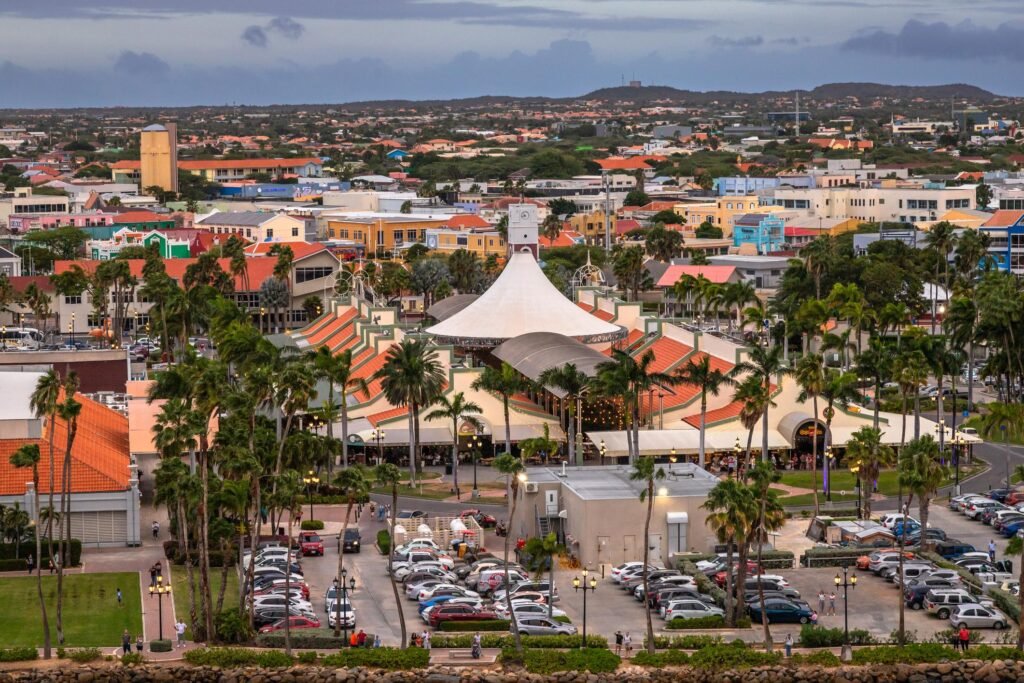
Most of Aruba’s population is concentrated in the western half of the island. Oranjestad (the capital, ~30,000) and San Nicolas (the second city, ~15,000) are the main population centres. The residential areas of Noord, Paradera, Santa Cruz, and Savaneta house most of the rest of the population between the tourist areas and the interior.
The tourist zone (Palm Beach hotel strip) is actually relatively lightly populated by residents — it’s primarily a commercial corridor. Most Arubans live in quieter residential neighbourhoods in the island’s centre and eastern sections.
Economy and Standard of Living
Aruba has one of the highest GDPs per capita in the Caribbean — approximately $29,000 USD — driven primarily by tourism (which accounts for roughly 70% of GDP) and the Valero Energy oil refinery. The standard of living is high by Caribbean standards, which partly explains the relatively high cost of visiting: the workforce is paid well and services reflect that.
Unemployment is low (typically 5–7%), and the island has avoided many of the economic instabilities that affect other Caribbean nations. The Aruban florin is pegged at 1.79 to the USD, providing monetary stability.
Aruba has a population of approximately 108,000 people. It is one of the most densely populated islands in the Caribbean relative to its size (180 km²). Over 90 nationalities are represented in the resident population.
Most Arubans speak Papiamento (the local Creole language) as their mother tongue. Dutch and English are also official languages and are spoken widely. Spanish is spoken by a large portion of the population given Aruba’s proximity to Venezuela. See the full Aruba language guide.
Aruba is one of the wealthier Caribbean territories with a GDP per capita of approximately $29,000 USD — among the highest in the region. The economy is driven primarily by tourism and the oil refinery. The high standard of living contributes to Aruba’s relatively high prices for visitors.
Arubans are Dutch nationals — Aruba is a constituent country of the Kingdom of the Netherlands and all residents are Dutch citizens with Dutch passports. Ethnically, the population is a diverse mix of Caribbean, Arawak, Dutch, Venezuelan, Colombian, and many other backgrounds.

🗺️ Where is Aruba? | 📏 How big is Aruba? | 🏳️ Aruba flag & identity guide | ✈️ Aruba travel guide
🎯 Book Top-Rated Aruba Tours
Free cancellation on most. Prices shown are per person.
Compare 100+ hotels. Free cancellation on most.
Planning your Aruba trip? Browse the best Aruba tours, top beaches and recommended hotels for honest reviews and direct booking.
4,000+ reviews · Free cancellation on most · Best price guaranteed
Bring Aruba Home With You
Authentic Aruba merch — designed by locals, shipped worldwide.


Our cars
Rent a car with us — from $50 a day
Automatic and air conditioned, picked up at the airport, your hotel or our Oranjestad office. Pay 13% online to hold the car and the rest when you collect it. Minimum 3 days.
See cars and prices →✈️ Search Flights & Hotels to Aruba
Compare prices across airlines and hotels in seconds.
We earn a small commission at no extra cost to you.
We are an independent Aruba travel guide. Our rankings are honest — we track live prices across 460+ tours and 180+ hotels, we update guides continuously, and no operator can pay for a better review. Read our editorial policy and who we are.
✈️ Cheap Flights to Aruba
Live lowest round-trip fares found on Aviasales
🚕 Airport Transfers
Pre-book a private transfer from Queen Beatrix Airport to your hotel
We earn a small commission from affiliate links at no extra cost to you. This never affects our recommendations.
Book direct · no booking fees
Our own bookings, if you need them
Run by us and local operators we work with directly. A small deposit online holds it, and you settle the rest on the day.