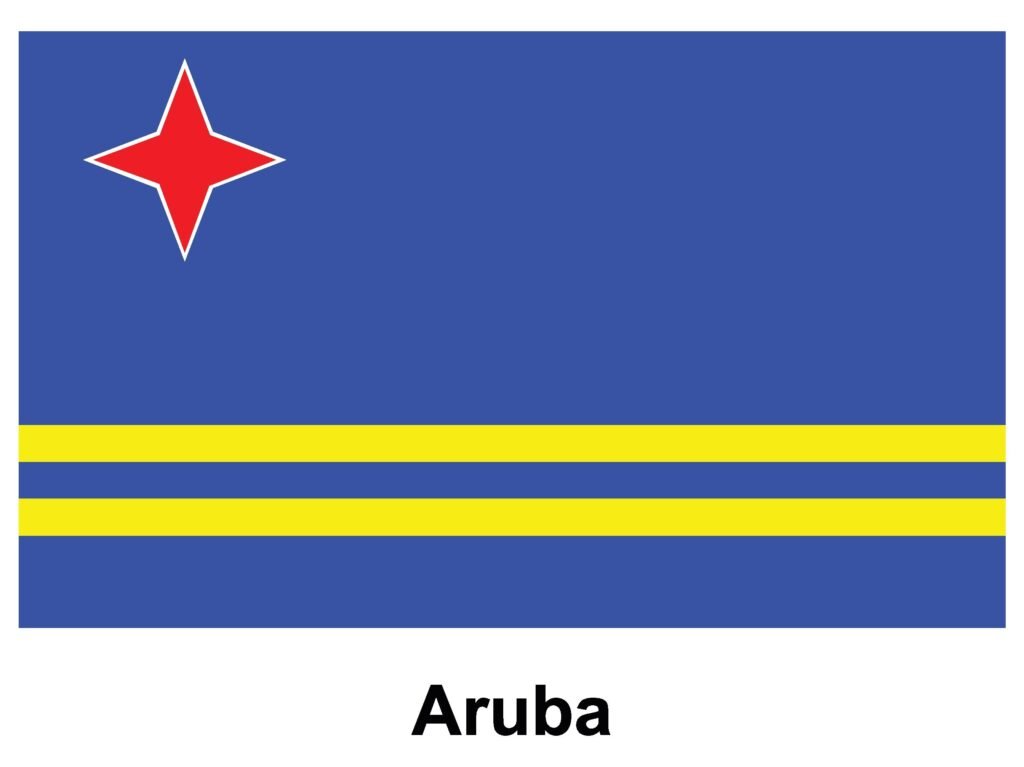
The Aruba flag is a striking design of blue and yellow with two parallel horizontal red stripes and a four-pointed star — each element carrying specific meaning about the island’s identity, its people, and its relationship with the sea and sky.
If you are driving yourself around the island, we rent cars direct: Aruba car rental.
Planning a trip to Aruba?
One email before you go, with what is worth booking ahead and what is not. No weekly newsletter.
By submitting you agree we can email you about your Aruba trip. One or two emails, then nothing. Unsubscribe in one click from any of them.
Description of the Aruba Flag
The flag consists of a blue field with two narrow parallel horizontal stripes of yellow running across the lower third of the flag, and a red four-pointed star with a white outline in the upper left (canton) corner.

| Element | Meaning |
| Blue field | The sea, the sky, and peace |
| Two yellow stripes | Freedom and the sun; also represent Aruba’s position as separate from the Netherlands Antilles (the two stripes = two separate entities) |
| Red four-pointed star | The four points represent the four cardinal directions, symbolising Aruba’s diverse population arriving from all directions. Also represents the sun, the earth, the sea, and blood shed by indigenous Arawak people |
| White outline on star | Purity and the white beaches of Aruba |
History of the Aruba Flag
The Aruba flag was adopted on March 18, 1976 — a date now celebrated as Flag Day, a national holiday in Aruba. The flag was designed by vexillologist (flag expert) Gustaaf Broersma. Its adoption predated Aruba’s Status Aparte (separate status within the Kingdom of the Netherlands) by a decade — the flag was one of the earliest assertions of Aruban national identity distinct from the Netherlands Antilles.
March 18, Flag Day, is one of the most important dates on the Aruban calendar. Celebrations include parades, cultural events, and the raising of flags across the island. If you’re visiting Aruba in mid-March around Carnival time, you may overlap with Flag Day celebrations.
Still deciding what to do?
These three come up again and again in reviews.

 Traveller favourite
Aruba Morning Snorkel Sail aboard Palm Pleasure Catamaran
$124 / person
Check dates & book Highly rated
Aruba Afternoon Snorkel Sail aboard Palm Pleasure Catamaran
$85 / person
Check dates & bookLive prices from Viator · free cancellation up to 24 hours before · we earn a small commission at no extra cost to you.
Aruba Flag vs Netherlands Flag
Aruba is a constituent country of the Kingdom of the Netherlands — it uses the Dutch passport and has the Dutch monarch as head of state. But its flag is entirely its own — the Aruba flag bears no resemblance to the Netherlands’ red-white-blue tricolour. The distinct flag is a symbol of Aruba’s separate status and cultural identity within the Kingdom.
The Aruba Coat of Arms
Alongside the flag, Aruba has its own coat of arms featuring an eagle, a golden torch, an Aruban gold mine, and a cactus — all elements of Aruban history and landscape. The coat of arms appears on official government documents.
The Aruba flag has a blue field with two narrow parallel yellow horizontal stripes in the lower third, and a red four-pointed star with a white outline in the upper left corner. The blue represents the sea and sky, the yellow stripes represent freedom, and the star represents Aruba’s diverse population from all four directions.
The Aruba flag was adopted on March 18, 1976. This date is celebrated as Flag Day — a national holiday in Aruba with parades and cultural events.
Blue = the sea, sky, and peace. Yellow = freedom and the sun. Red (star) = the blood of the Arawak people and Aruba’s diverse history. White (star outline) = the purity of Aruba’s white beaches.
Aruba travel guide | Where is Aruba? | Aruba population & culture
Planning your Aruba trip? Browse the best Aruba tours, top beaches and recommended hotels for honest reviews and direct booking.
Compare 100+ hotels. Free cancellation on most.
4,000+ reviews · Free cancellation on most · Best price guaranteed
Bring Aruba Home With You
Authentic Aruba merch — designed by locals, shipped worldwide.


Our cars
Rent a car with us — from $50 a day
Automatic and air conditioned, picked up at the airport, your hotel or our Oranjestad office. Pay 13% online to hold the car and the rest when you collect it. Minimum 3 days.
See cars and prices →✈️ Search Flights & Hotels to Aruba
Compare prices across airlines and hotels in seconds.
We earn a small commission at no extra cost to you.
We are an independent Aruba travel guide. Our rankings are honest — we track live prices across 460+ tours and 180+ hotels, we update guides continuously, and no operator can pay for a better review. Read our editorial policy and who we are.
✈️ Cheap Flights to Aruba
Live lowest round-trip fares found on Aviasales
🚕 Airport Transfers
Pre-book a private transfer from Queen Beatrix Airport to your hotel
We earn a small commission from affiliate links at no extra cost to you. This never affects our recommendations.
Book direct · no booking fees
Our own bookings, if you need them
Run by us and local operators we work with directly. A small deposit online holds it, and you settle the rest on the day.