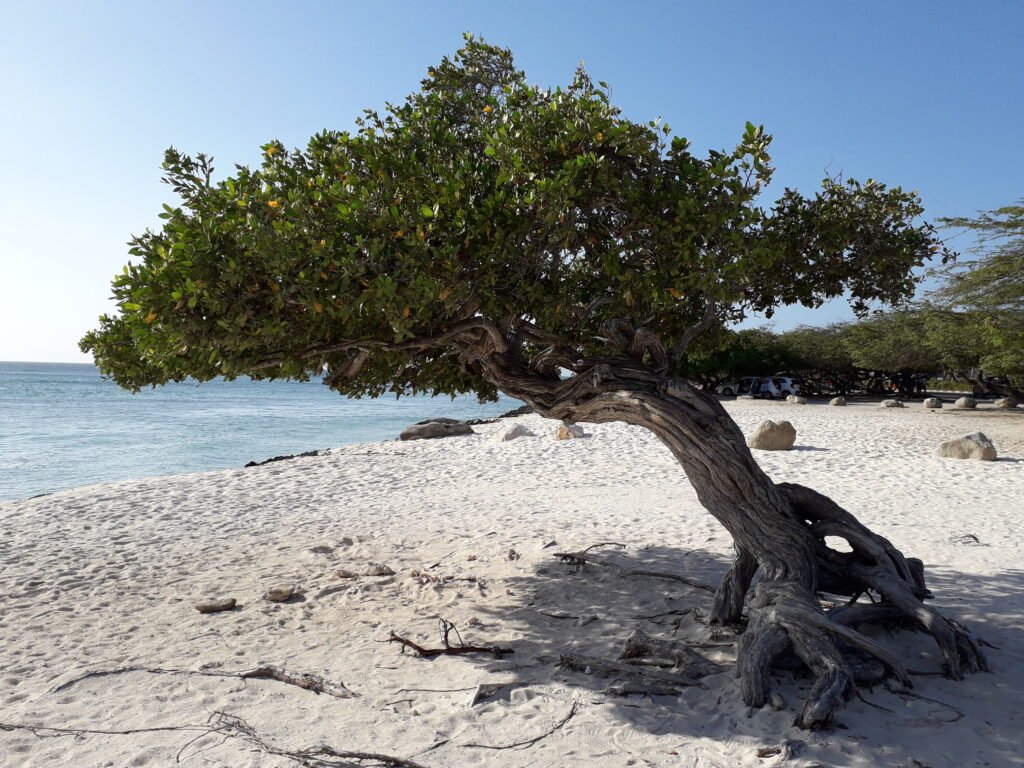
• What they are: Caesalpinia coriaria — a native Caribbean tree bent permanently by Aruba’s northeast trade winds
• Direction: Always point southwest — the opposite direction of the prevailing wind
• Best location: Eagle Beach, California Lighthouse area, throughout the island
• Local name: Watapana in Papiamento — Aruba’s local language
• Significance: Aruba’s natural compass — used historically for navigation on the island
The Aruba divi divi tree is the island’s most iconic natural symbol — permanently bent by the trade winds and pointing southwest across every corner of the island. Here’s everything to know about the Aruba divi divi tree.
The divi divi tree (Caesalpinia coriaria) is Aruba’s most iconic natural symbol — the permanently bent tree whose shape is carved by the island’s relentless northeast trade winds. Every divi divi tree on the island points in the same direction, making them a natural compass. Here’s everything to know about them.
Planning a trip to Aruba?
One email before you go, with what is worth booking ahead and what is not. No weekly newsletter.
By submitting you agree we can email you about your Aruba trip. One or two emails, then nothing. Unsubscribe in one click from any of them.
Why Are Divi Divi Trees Bent?
Aruba’s northeast trade winds blow consistently at 15–25 knots almost every day of the year. Divi divi trees grow in the direction of least resistance — bending away from the prevailing wind and pointing permanently to the southwest. Because the trade winds blow from the same direction year-round, every divi divi on the island ends up pointing the same way. They’re often called Aruba’s natural compass — if you’re lost on the island, find a divi divi tree and you know which direction is southwest.
Where to See the Best Divi Divi Trees
Eagle Beach
The most photographed divi divi trees in Aruba grow on Eagle Beach — the famous fofoti (a similar species also bent by the wind) trees on the sand with the turquoise water behind them. This is the classic Aruba postcard image. Walk south along Eagle Beach past the Bucuti resort for the best specimens right on the sand.
California Lighthouse Area
The northern coast near the California Lighthouse has beautiful divi divi trees in their natural setting — bent against the dramatic rocky coastline and the trade winds coming off the open Atlantic. Jeep tours always pass through this area.
Arikok National Park
The national park covers 20% of the island’s landmass and contains divi divi trees throughout the rugged interior. The natural, undisturbed landscape shows the trees in their true environment.
Compare 100+ hotels — free cancellation on most.
Divi Divi Tree Facts
- Scientific name: Caesalpinia coriaria
- Local name: Watapana (in Papiamento, Aruba’s local language)
- Height: Typically 3–8 metres
- Wood: Historically used for tanning leather due to tannin content in the pods
- Related: The fofoti tree (Conocarpus erectus) on Eagle Beach looks similar and is also bent by the wind — often confused with the divi divi
- Protected: Divi divi trees are protected in Aruba and cannot be cut without government permission
🎯 Book Top-Rated Aruba Tours
Browse every Aruba tour with live prices →
Free cancellation on most. Book ahead — popular tours sell out.
Already set up on the sand · Eagle Beach or Palm Beach · Yours 10am to 4pm
Three that consistently deliver
Chosen on rating and review count, not commission.
 Most booked
Aruba Sunset Sail Dinner Cruise with Open Bar by Catamaran
$137 / person
Check dates & book

Live prices from Viator · free cancellation up to 24 hours before · we earn a small commission at no extra cost to you.
Related Aruba Guides
- Aruba Travel Guide — complete planning resource
- Aruba Photography Locations — most Instagrammable spots
- Aruba Sightseeing — top spots to see
- Things to Do in Aruba — ranked activities
Bring Aruba Home With You
Authentic Aruba merch — designed by locals, shipped worldwide.


Our cars
Rent a car with us — from $50 a day
Automatic and air conditioned, picked up at the airport, your hotel or our Oranjestad office. Pay 13% online to hold the car and the rest when you collect it. Minimum 3 days.
See cars and prices →✈️ Search Flights & Hotels to Aruba
Compare prices across airlines and hotels in seconds.
We earn a small commission at no extra cost to you.
We are an independent Aruba travel guide. Our rankings are honest — we track live prices across 460+ tours and 180+ hotels, we update guides continuously, and no operator can pay for a better review. Read our editorial policy and who we are.
✈️ Cheap Flights to Aruba
Live lowest round-trip fares found on Aviasales
🚕 Airport Transfers
Pre-book a private transfer from Queen Beatrix Airport to your hotel
We earn a small commission from affiliate links at no extra cost to you. This never affects our recommendations.
Book direct · no booking fees
Our own bookings, if you need them
Run by us and local operators we work with directly. A small deposit online holds it, and you settle the rest on the day.